|
Machariapo Valley (home of the Inti Tanager)
by Bennett Hennessey
Updated Feb 2022
Apolo is the access point to the Machariapo and Tuichi 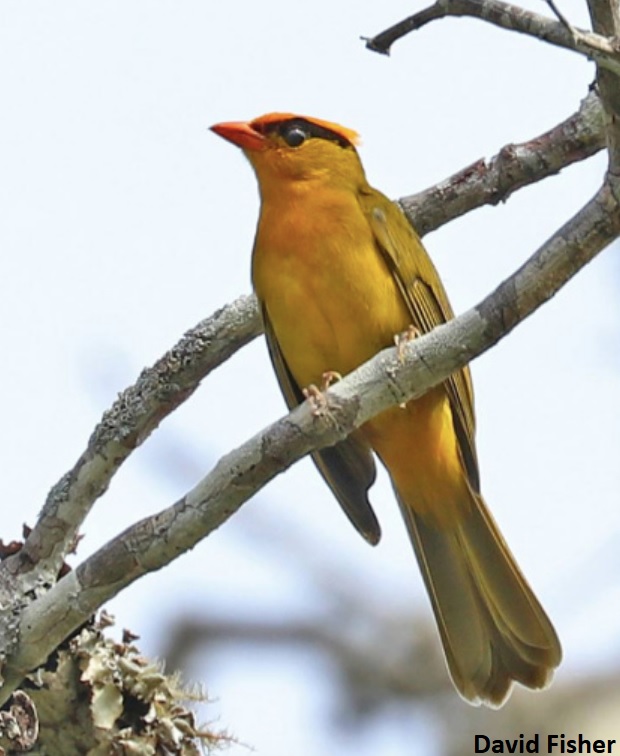 isolated Inter‑Andean dry montane forest (800 to 1300 m) within Madidi National Park. The key birds in the area are the Inti Tanager (photo), Yungas Antwren, the threatened Military Macaw, the Rufous‑vented Ground‑Cuckoo, and could be the Scimitar-winged Piha. Keep in mind the Inti Tanager is a seasonal migrant not found in the area from April to Octobe when the area is heavily defoliated and the best time to see the Rufous-vented Ground-Cuckoo. This large rain shadow dry forest is a fairly unique ecosystem and offers many bird species more common to Chaco and dry forests south of Santa Cruz city like Ochre‑cheeked Spinetail, Rufous Casiornis, Black‑capped Antwren, Black‑bellied Antwren, and Saffron‑billed Sparrow. But also because of its highland location the area shares species of Andean river valleys and middle montane forests like Yungas Manakin, Plain Antvireo, Pale‑edged Flycatcher, White‑winged Tanager, Two‑banded and Golden‑crowned Warbler. isolated Inter‑Andean dry montane forest (800 to 1300 m) within Madidi National Park. The key birds in the area are the Inti Tanager (photo), Yungas Antwren, the threatened Military Macaw, the Rufous‑vented Ground‑Cuckoo, and could be the Scimitar-winged Piha. Keep in mind the Inti Tanager is a seasonal migrant not found in the area from April to Octobe when the area is heavily defoliated and the best time to see the Rufous-vented Ground-Cuckoo. This large rain shadow dry forest is a fairly unique ecosystem and offers many bird species more common to Chaco and dry forests south of Santa Cruz city like Ochre‑cheeked Spinetail, Rufous Casiornis, Black‑capped Antwren, Black‑bellied Antwren, and Saffron‑billed Sparrow. But also because of its highland location the area shares species of Andean river valleys and middle montane forests like Yungas Manakin, Plain Antvireo, Pale‑edged Flycatcher, White‑winged Tanager, Two‑banded and Golden‑crowned Warbler.
This area, accessible by a 45 km dirt road, is of difficult access. The road passes through a large river that can be impassible during the rainy season, or after a good rain. Locals have taken to crossing the foot bridge on small 100cc motorcycles as a form of year round access.
Now if you are familiar with neotropical birds, you should have stopped and reread Rufous-vented Ground-Cuckoo. Because this is a bird you NEVER ever see. A plethora of jungle lodges will have the bird listed for their site, but ask how many people have actually seen the bird. Well, here, way out of the species' normal habitat, it becomes visable. Clearly the best place in the world to SEE this species. This is the only dependable site in Bolivia for these three birds. A one week (7 days) camping tour to this area should provide at least 140 dry forest and middle montane bird species plus observations of at least one Rufous‑vented Ground‑Cuckoo, one Yungas Antwren and many Military Macaws. The dry forest also appears to have high numbers of some of the more difficult to identify Flycatchers, giving repeat performances of some of the finer details. Remember the 5 keys to Neotropical Flycatcher Identification: breast, head, back, wingbar and bill coloration.
Military Macaws are common lower down the trail within the Tuichi Valley. There is no particular site for them, but their loud screeches will often give them away, whether in flight or if lucky perched for close views. Approximately three kilometres up stream of the usually dry river bed of the appropriately named "Rio Seco" 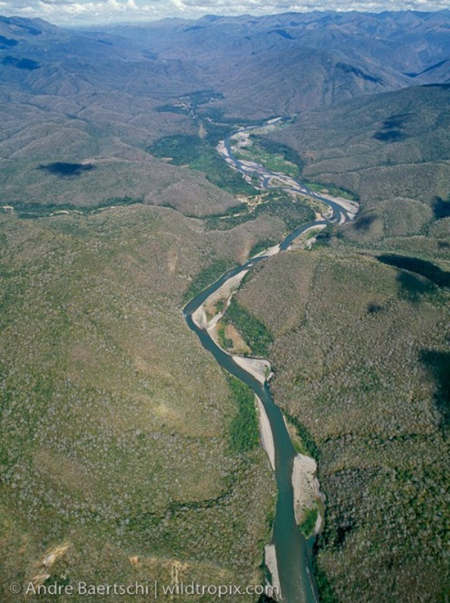 before crossing Rio Tuichi to Asariamas is an occasionally used Kopa where in July 2000 Bennett saw 48 Military Macaws, 18 Mealy Parrots and 6 Blue‑headed Parrots chewing the cliff edge soil. This would be an early morning activity and the incredible raucous gives the site away, but they are not always present. before crossing Rio Tuichi to Asariamas is an occasionally used Kopa where in July 2000 Bennett saw 48 Military Macaws, 18 Mealy Parrots and 6 Blue‑headed Parrots chewing the cliff edge soil. This would be an early morning activity and the incredible raucous gives the site away, but they are not always present.
The Rufous‑vented Ground‑Cuckoo can be observed on the trail throughout the dry forest, more common in the Rio Machariapo valley. The birds are quite skittish and will dodge away through the forest undergrowth, but with patience and slow quiet birding one should be able to observe one unaware. Frank E. Rheindt saw in early December 2011 two Rufous-vented Ground-Cuckoos hopping along the path and another booming in a tree for 5 minutes.
The Yungas Antwren will require a bit of research into their plumages‑especially the female. This is a skulker bird frequenting the moist river valleys of the small wet montane streams on the trail. The birds have always been observed in their sexually dimorphic pairs with 2 to 4 species understory foraging flocks, seeking insect food in vine tangles 1‑7 meters above the ground. For best results, we recommend keeping an eye out for these birds in the early morning. Traveling to Asariamas, the birds have been observed along the trail climbing the moist valley just after Estancia Tuichi (the only large clearing on the trail). Also birds are present in the thin moist valleys in the Machariapo valley after the road turns into the trail. This bird very reluctantly sings, but listen out for the chips and psss of foraging flock call notes.
The Scimitar-winged Piha is a very rare bird in Bolivia. In 2017, Jeffrey Cheney saw the species in the Choquetanga Valley "I saw the Scimitar-winged Piha in the gulch just below the rockslide. That rockslide was more or less at the beginning of the Machariapo Valley after you enter the national Park and head towards Peru."
Logistics: You first need to be in Apolo. 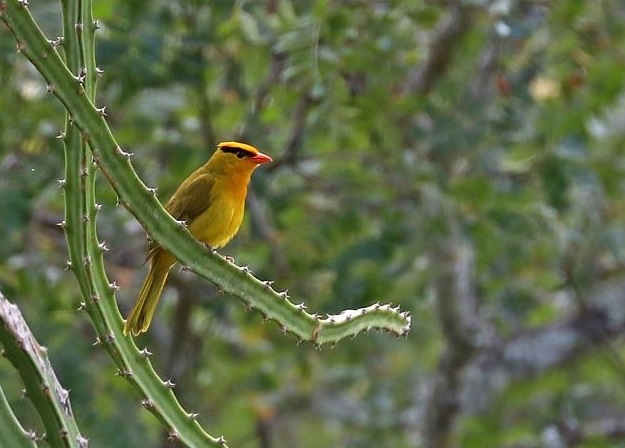 From here head along the road to Assariamus, which will take you up out of Apolo and then down into the Machariapo Dry Valley. sourroad slowly descends along the river, with a shallow crossing eventually. This used to be a mule trail, but has been made into a dirt road, but one that is often cut off. You could try reaching the site with a rented car (from La Paz- no car rental in Apolo), rent a local Apolo motorcycle (if possible), or get a taxi to drop you off, and pick you up at the end of the day (paying a good rate, with withheld payment until pickup- negotiate all this way before hand). There is next to no traffic on the deadend road. From here head along the road to Assariamus, which will take you up out of Apolo and then down into the Machariapo Dry Valley. sourroad slowly descends along the river, with a shallow crossing eventually. This used to be a mule trail, but has been made into a dirt road, but one that is often cut off. You could try reaching the site with a rented car (from La Paz- no car rental in Apolo), rent a local Apolo motorcycle (if possible), or get a taxi to drop you off, and pick you up at the end of the day (paying a good rate, with withheld payment until pickup- negotiate all this way before hand). There is next to no traffic on the deadend road. 
|